Dental Crowns: Materials, Cost and How Long They Really Last
 By Dr. Kanak Trivedi, DDS
Sep 15, 2026 · 6 min read
By Dr. Kanak Trivedi, DDS
Sep 15, 2026 · 6 min read
Which crown material is right for your tooth, what drives the cost, and how long crowns actually last. A plain guide for Fullerton patients weighing up a crown.
A crown is one of the most common things a dentist will recommend, and one of the least explained. You are usually told the tooth needs covering, given a choice of materials you have no basis for comparing, and quoted a number.
This is what actually sits behind that conversation.
What a crown is for
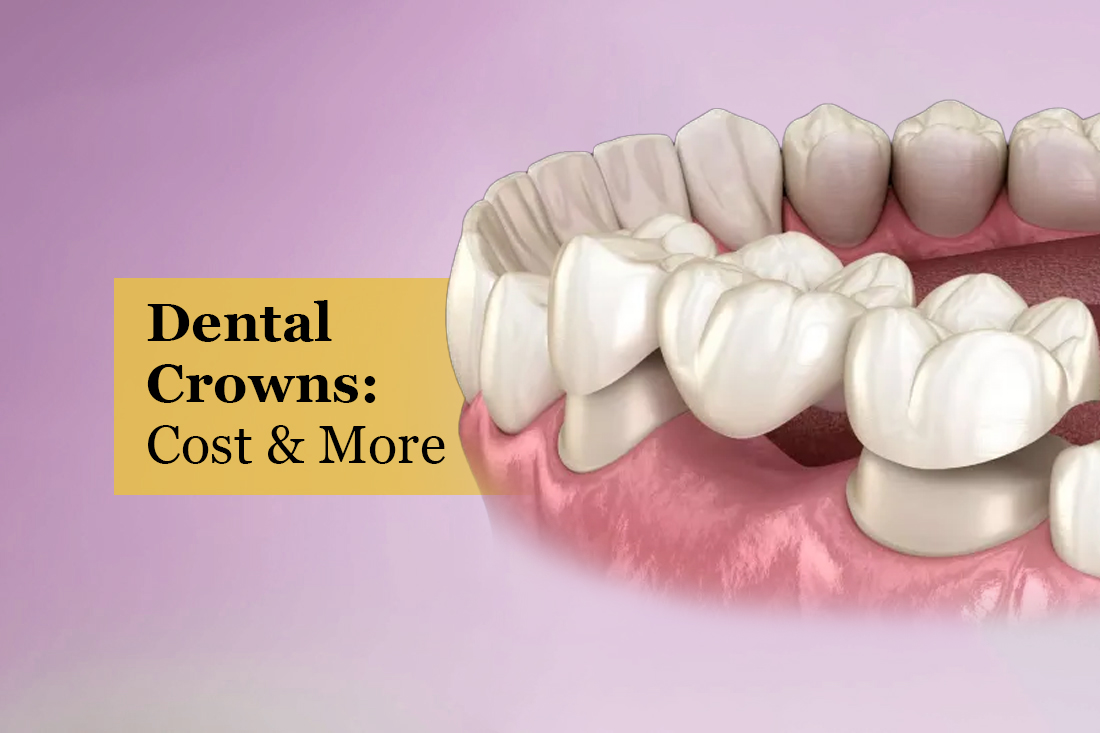
A crown is a cover that fits over the whole visible part of a tooth, restoring its shape and taking over the job of chewing. It is used when a tooth has lost too much structure to be held together by a filling.
That usually happens for one of a few reasons: a large old filling that keeps failing, a crack, a fracture, heavy wear, or a tooth that has had root canal treatment and become more brittle as a result. The logic in each case is the same. A filling replaces missing tooth from the inside; a crown protects what is left from the outside.
That distinction matters when you are deciding. A crown involves removing some healthy tooth structure to make room for the cover. It is a bigger commitment than a filling, which is why it is not recommended for small repairs.
The materials, and what each is good at
All-ceramic, including lithium disilicate
These are the usual choice for teeth that show when you smile. They handle light in a way that looks like natural enamel, so they can be matched convincingly to neighbouring teeth. Modern ceramics are considerably stronger than the porcelains of twenty years ago, and there is long-term clinical data behind them.
Best for: front teeth and visible premolars, and any case where appearance is the priority.
Zirconia
Zirconia is a very strong ceramic, which makes it well suited to molars and to patients who grind. Full-strength zirconia is more opaque than lithium disilicate, so it can look slightly less lifelike, though layered versions improve on that considerably.
Best for: back teeth, heavy bites, and anyone who has broken restorations before.
Porcelain fused to metal
An older approach with a metal substructure under a porcelain surface. Strong and long-proven, but the metal margin can show as a dark line at the gumline if the gum recedes over the years.
Best for: situations where strength matters and the crown is not visible.
Gold and other metal alloys
Unfashionable and still extremely good. Gold is kind to the opposing teeth, seals well, and can be made thinner than ceramic, which means less tooth needs removing. The obvious drawback is that it looks like gold.
Best for: molars at the back, particularly in patients with a heavy bite who are not concerned about appearance.
How long crowns actually last
Honest answer: it depends more on the tooth and the patient than on the crown. Long-term clinical follow-up of monolithic lithium disilicate crowns made chairside extends to fifteen years, and research comparing fabrication methods suggests survival is more closely associated with the material used than with how the crown was made.
What shortens a crown's life is rarely the crown itself failing. It is usually one of these:
- Decay starting at the margin where the crown meets the tooth, which is why the gumline still needs flossing.
- Gum disease, which changes the support around the tooth.
- Grinding, which loads the restoration far beyond normal chewing forces.
- The tooth underneath fracturing, particularly if it has had root canal treatment.
In other words, a crown is only as durable as the tooth and gum holding it. That is the strongest argument for keeping up with cleanings after you have paid for one.
What drives the cost
Prices vary between practices and regions, so a specific figure here would be misleading. What is consistent is what moves the number:
- The material chosen.
- Whether the crown is made in a laboratory or milled in the practice.
- Whether the tooth needs preparatory work first, such as a build-up or root canal treatment.
- Your dental plan's rules, including annual maximums and any waiting period.
- Whether a temporary crown is needed between appointments.
Most dental plans treat a crown as a major restorative procedure rather than a basic one, which usually means a lower percentage covered and the annual maximum coming into play. Ask for a written estimate with procedure codes before you commit, and ask what happens if the tooth needs root canal treatment once work begins, because that changes the total.
What the appointments involve
Traditionally a crown takes two visits. At the first, the tooth is shaped, an impression or digital scan is taken, and a temporary crown is fitted. The permanent crown is made in a laboratory, and at the second visit it is tried in, adjusted and cemented.
Practices with chairside milling equipment can complete some crowns in a single visit. That is covered in more detail in our article on same-day treatment.
Either way, expect the tooth to feel slightly unfamiliar for a few days and the bite to need a small adjustment if anything feels high. That adjustment takes minutes and is worth booking rather than living with.
Questions worth asking before you agree
- Why a crown rather than a large filling or an onlay?
- Which material are you recommending for this particular tooth, and why that one?
- How much healthy tooth will need to be removed?
- Is there any chance this tooth will need root canal treatment, and what happens to the cost if it does?
- What is the total, including the temporary and the fit appointment?
A good answer to the second question will refer to your bite, the position of the tooth and how much structure is left, not just to price.
Keep reading