
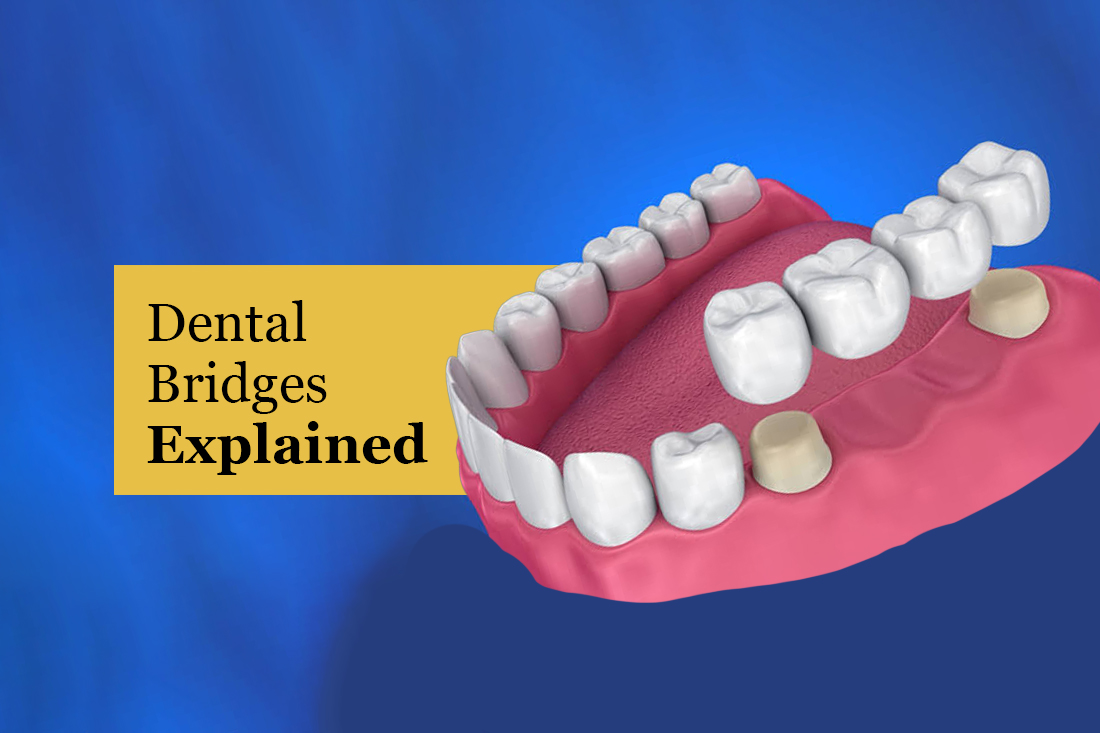
Dental Bridges Explained: Restoring Your Smile After Tooth Loss
 By Dr. Kanak Trivedi, DDS
Aug 19, 2026 · 3 min read
By Dr. Kanak Trivedi, DDS
Aug 19, 2026 · 3 min read
Missing one or more teeth? Learn how dental bridges work, the different types available, and how they compare to implants.
A gap from a missing tooth affects more than appearance — it can shift your bite and put extra strain on nearby teeth. Dental bridges have long been a reliable way to close that gap. Here's how they work.
What a Dental Bridge Is and How It Works
A dental bridge is a fixed prosthetic that fills spaces left by missing teeth. It anchored by crowns placed over existing teeth on either side of the gap, supporting a prosthetic replacement tooth (pontic) in the center.
Types of Bridges: Traditional, Cantilever, Maryland, Implant-Supported
Traditional Bridges:
Anchor porcelain crowns onto adjacent natural teeth.
Cantilever Bridges:
Used when anchor teeth are available on only one side of the space.
Maryland Bridges:
Utilize a subtle metal or ceramic framework bonded to the backs of adjacent teeth.
Implant-Supported Bridges:
Anchor securely onto titanium dental implants instead of natural teeth.
The Placement Process, Step by Step
At your first appointment, supporting teeth are prepared and a digital impression is taken. A temporary bridge is placed while a master dental laboratory crafts your custom restoration. At your second visit, your custom bridge is bonded into place.
How Long Bridges Last With Proper Care
With thorough daily hygiene and regular checkups, dental bridges typically last between 10 and 15 years.
Bridges vs. Implants: Which Fits Your Situation
Bridges offer a faster, non-surgical treatment timeline. Implants preserve adjacent enamel structure and prevent underlying jawbone loss.
Caring for Your Bridge Long-Term
Use a specialized floss threader or water flosser daily to remove plaque from beneath the pontic bridge section.
Keep reading