
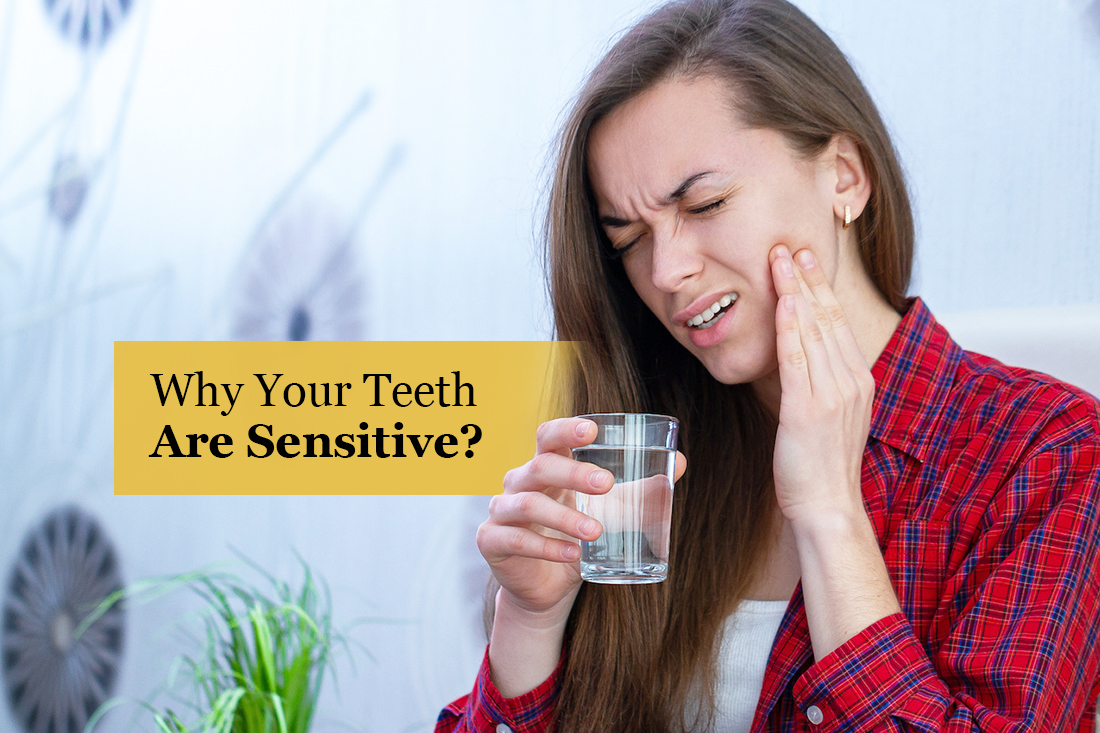
Why Your Teeth Are Sensitive, and What Actually Helps
 By Dr. Kanak Trivedi, DDS
Sep 10, 2026 · 5 min read
By Dr. Kanak Trivedi, DDS
Sep 10, 2026 · 5 min read
Cold drinks making you wince? Here is what causes sensitive teeth, which remedies have evidence behind them, and when sensitivity means something more serious.
A mouthful of cold water, a sharp jolt through one tooth, gone in a second. Sensitivity is common enough that most people assume it is just how their teeth are. Often it is fixable, and occasionally it is a warning.
Knowing which is which is mostly a matter of paying attention to the pattern.
What is actually happening
Underneath your enamel is dentine, and dentine is not solid. It is threaded with microscopic tubules running towards the nerve at the centre of the tooth.
The widely accepted explanation, known as the hydrodynamic theory, is that when exposed dentine meets something cold, hot, sweet or acidic, fluid inside those tubules moves. That movement stimulates nerve endings in the pulp, producing the short, sharp pain that characterises sensitivity.
It is common. Studies have found dentine hypersensitivity affects somewhere between ten and thirty per cent of people. So if this is you, you are in ordinary company.
Why the dentine gets exposed
Gum recession
Dentine is covered by enamel on the crown, but on the root it is covered by a much thinner layer. When gums recede, root surface is exposed and sensitivity often follows. Recession can come from gum disease, from ageing, or from brushing too hard with a firm brush.
Enamel wear from acid
Acid softens and gradually dissolves enamel. The usual sources are fizzy drinks including sparkling water, citrus, wine, and sports drinks. Reflux and frequent vomiting also expose teeth to stomach acid, which is considerably more aggressive.
Grinding and clenching
Grinding wears the biting surfaces and flexes the tooth near the gumline, which can expose dentine. If your sensitivity is worse in the morning, this is a strong candidate.
After dental treatment
Sensitivity after a filling, a deep cleaning or whitening is common and usually temporary. After a deep cleaning it happens because root surfaces previously covered by inflamed gum are now exposed. After whitening it is a known, well-documented and reversible effect.
A cracked tooth or decay
This is the category that matters most, and it usually announces itself differently. See below.
The pattern that should send you to a dentist
General sensitivity is usually brief and affects several teeth. The signs that point to something needing attention are more specific:
- Pain that lingers for more than a few seconds after the stimulus is removed.
- Pain that wakes you at night, or throbs on its own without being triggered.
- Sensitivity in one single tooth rather than a general area.
- A sharp pain when you bite down, or when you release the bite, which can suggest a crack.
- Sensitivity accompanied by swelling, a bad taste, or a gum boil.
- Sensitivity to heat specifically, which is often more significant than cold.
Any of these is worth an appointment rather than another tube of toothpaste. Lingering pain in particular suggests the nerve is inflamed rather than simply stimulated.
What genuinely helps
Desensitising toothpaste, used properly
These work in one of two ways: calming the nerve response, typically using potassium nitrate, or physically blocking the dentine tubules, using ingredients such as fluoride, stannous fluoride, or arginine with calcium carbonate.
Two practical points from the research. First, because the mechanisms differ, one formulation may work for you where another does nothing, and trying a different type is reasonable if the first fails. Second, it takes consistent use over a few weeks, not a few days.
One tip that costs nothing: after brushing, rub a little of the toothpaste directly onto the sensitive area with a fingertip and do not rinse it away.
Change how you brush, not how hard
Use a soft-bristled brush and let the bristles do the work. Hard brushing does not clean better and contributes directly to recession and wear at the gumline.
Give acid time to clear
Enamel is temporarily softened after anything acidic, so brushing straight afterwards can remove more than intended. Rinse with water, wait around half an hour, then brush. Drinking acidic drinks with a meal rather than sipping across an afternoon also limits exposure.
Treatments your dentist can apply
In-practice options include fluoride varnish, desensitising agents applied directly to the exposed area, and bonding to cover a worn notch at the gumline. If grinding is the cause, a night guard addresses the source rather than the symptom. If recession is severe, a gum graft may be discussed.
What to expect at the appointment
Expect to be asked what triggers it, how long it lasts, whether it is one tooth or several, and whether anything has changed recently. Expect an examination for recession, wear facets, cracks and decay, and possibly an X-ray and a cold test on individual teeth.
The goal is to separate ordinary exposed dentine from a tooth with a genuine problem, because the treatment is entirely different.
The honest summary
Most sensitivity is manageable, and the boring advice of a soft brush, the right toothpaste used consistently, and less acid exposure resolves a good proportion of it. What deserves attention is sensitivity that lingers, throbs, or belongs to one tooth. That is not something to manage at home.
Keep reading