Receding Gums: Why It Happens and What Your Dentist Can Do
Gum recession exposes tooth roots and leads to sensitivity and decay. Learn the common causes, how to stop it getting worse, and the treatment options available in Fullerton.
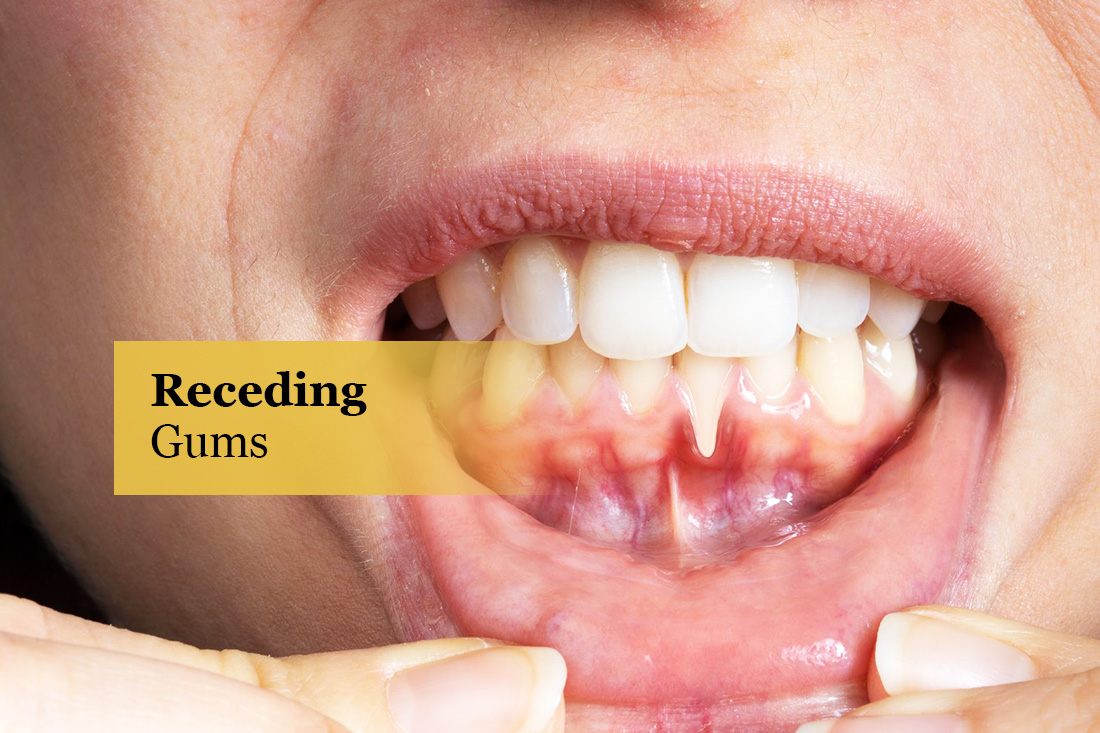
If your teeth look longer than they used to, or you feel a sharp twinge when you drink something cold, your gums may be receding. Recession happens gradually, which is why many patients only notice it once sensitivity sets in. The good news is that it can be slowed, and in some cases repaired.
At Real Dentistry we measure gum levels at routine checkups so changes are caught early. This article explains what causes recession and what you can do about it.
Common causes
- Gum disease: the most frequent cause. Bacteria break down the tissue and bone that support the teeth.
- Aggressive brushing: a hard brush or heavy scrubbing wears away gum tissue over time.
- Teeth grinding and clenching: excess force can push gums away from the tooth.
- Tooth position: teeth that sit outside the arch often have thinner gum covering them.
- Tobacco use, oral piercings, and some orthodontic movements.
The ADA gum disease overview explains how plaque drives most of these problems.
Why it matters
Exposed roots have no enamel, so they are more sensitive and decay more easily. Recession can also make teeth look uneven and, when caused by gum disease, signals that the supporting bone may be shrinking too. Left unchecked, that can lead to loose teeth.
Stopping it from getting worse
Switch to a soft-bristled brush and use gentle, short strokes angled toward the gum line. An electric brush with a pressure sensor helps many patients. Clean between teeth daily. If you grind your teeth, a night guard reduces the forces involved. Treating gum disease with a professional cleaning or periodontal therapy removes the bacteria driving the problem.
Treatment options
Mild recession is usually monitored and managed with better home care and desensitizing products. Where the root is exposed and sensitive, the dentist can apply a bonding material or fluoride varnish. More advanced recession may be treated with a gum graft, which covers the root with tissue taken from the palate or a donor source. Your dentist will explain which approach fits your situation.
What to ask at your appointment
Ask how much recession has been measured, whether it has changed since your last visit, and what is most likely causing it. If a graft is suggested, ask about the healing time and what the result should look like.
Gum care in Fullerton
Learn about gum treatment and professional cleanings at Real Dentistry. Request an appointment or call (714) 525-2888 if you have noticed your gums pulling back.
Keep reading