
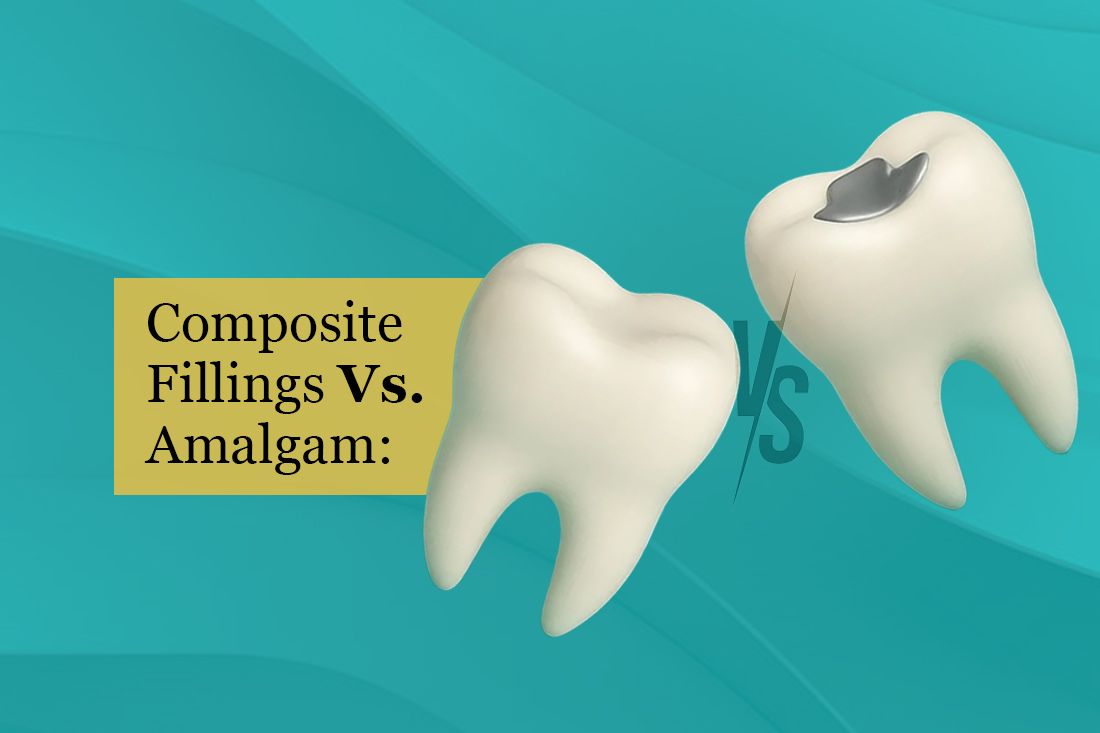
Composite Fillings vs. Amalgam: Which Is Right for You?
 By Dr. Kanak Trivedi, DDS
Jun 17, 2026 · 3 min read
By Dr. Kanak Trivedi, DDS
Jun 17, 2026 · 3 min read
Silver or tooth-colored fillings? Compare composite and amalgam fillings — durability, appearance, and cost — to decide what's best for your smile.
If you grew up with metal fillings, you might be surprised at how far dental materials have come. Today, most Fullerton dentists recommend tooth-colored composite fillings — but amalgam still has its place. Here's how the two compare.
What Composite Fillings Are Made Of
Composite fillings consist of a durable mixture of tooth-colored micro-glass particles and dental resin. They bond directly to your natural enamel, providing structural support while matching your natural tooth shade.
What Amalgam (Silver) Fillings Are Made Of
Amalgam fillings are crafted from a combination of silver, tin, copper, and elemental mercury. Used for over a century, amalgam is known for its physical strength and durability.
Appearance: Why Composite Wins for Visible Teeth
Composite resin is shaded to match surrounding teeth seamlessly, making it ideal for visible front teeth and noticeable side areas. Amalgam leaves dark silver spots when you laugh or smile.
Durability and Longevity Compared
Amalgam fillings withstand high chewing forces in back molars for 10 to 15 years. Modern composite resins offer comparable durability while preserving more of your natural tooth structure during placement.
Cost Differences Between the Two
Composite materials cost slightly more than silver amalgam due to advanced chemical bonding techniques. Most dental insurance plans cover composite restorations on front teeth, with many expanding coverage to back teeth.
Which One Your Dentist Will Likely Recommend, and Why
Real Dentistry generally recommends composite restorations because they match natural tooth shade, bond directly to natural enamel, and require less natural tooth removal during cavity prep.
Keep reading