Dentures vs. Dental Implants: Choosing the Best Tooth Replacement Option
 By Dr. Kanak Trivedi, DDS
Jul 15, 2026 · 3 min read
By Dr. Kanak Trivedi, DDS
Jul 15, 2026 · 3 min read
Missing multiple teeth? Compare dentures and dental implants side by side — cost, comfort, maintenance — to find the right fit for your lifestyle.
When it comes to replacing missing teeth, dentures and dental implants are the two most common solutions — but they work very differently. Here's an honest, side-by-side comparison to help you decide what fits your life and budget.
How Dentures Work: Full vs. Partial
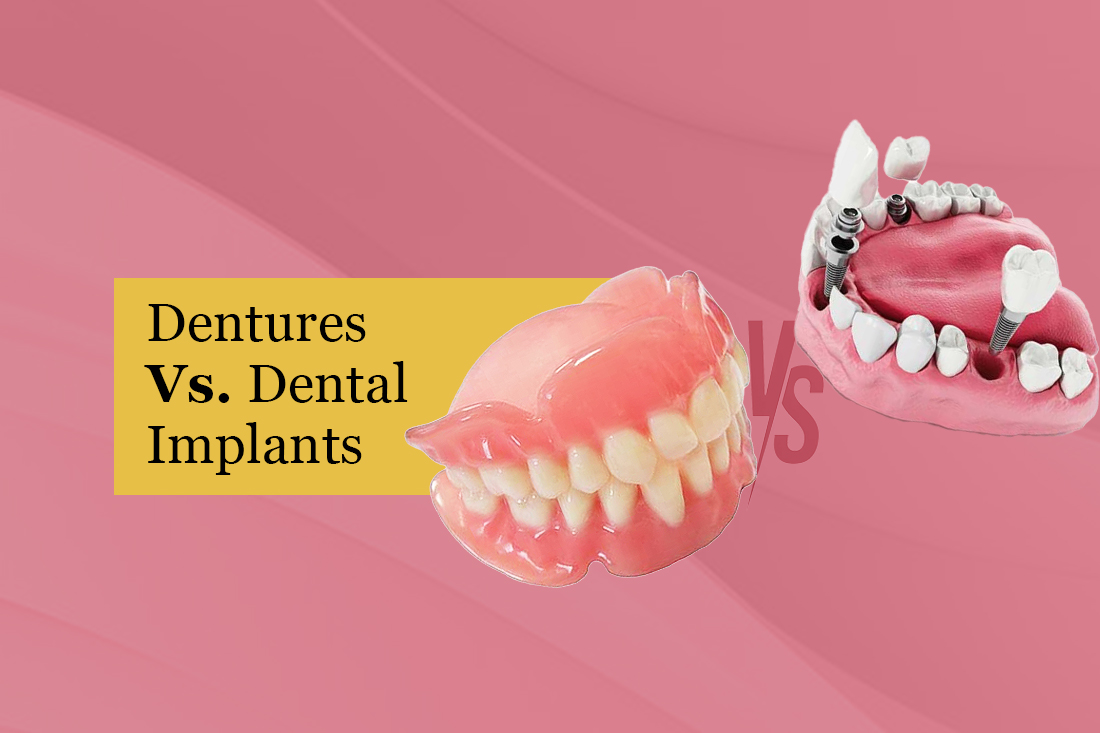
Dentures are removable dental prosthetics. Full dentures replace an entire arch of missing teeth, resting directly on your gums. Partial dentures use metal or acrylic clasps attached to adjacent natural teeth to fill selective gaps.
How Dental Implants Work
Dental implants are titanium posts surgically anchored into the jawbone, acting as permanent structural replacement roots for crowns, bridges, or implant-supported dentures.
Comfort and Daily Maintenance Compared
Dentures:
Require removal for nightly cleaning and soaking, along with messier adhesives to prevent slipping while eating.
Implants:
Function just like natural teeth. You brush and floss them normally, without adhesives or removal.
Longevity: What Lasts Longer
Dentures typically require replacement or relining every 5 to 7 years due to ongoing jawbone shrinkage. Dental implants preserve bone mass and can last a lifetime with proper care.
Cost Comparison Over Time
Dentures cost less upfront. Implants require a higher initial investment, but often cost less long-term by eliminating replacement cycles and adhesive supplies.
Which Option Fits Which Situation
Dentures provide quick, budget-conscious tooth replacement. Implants are ideal for patients seeking maximum stability, bone health, and a permanent solution.
Keep reading