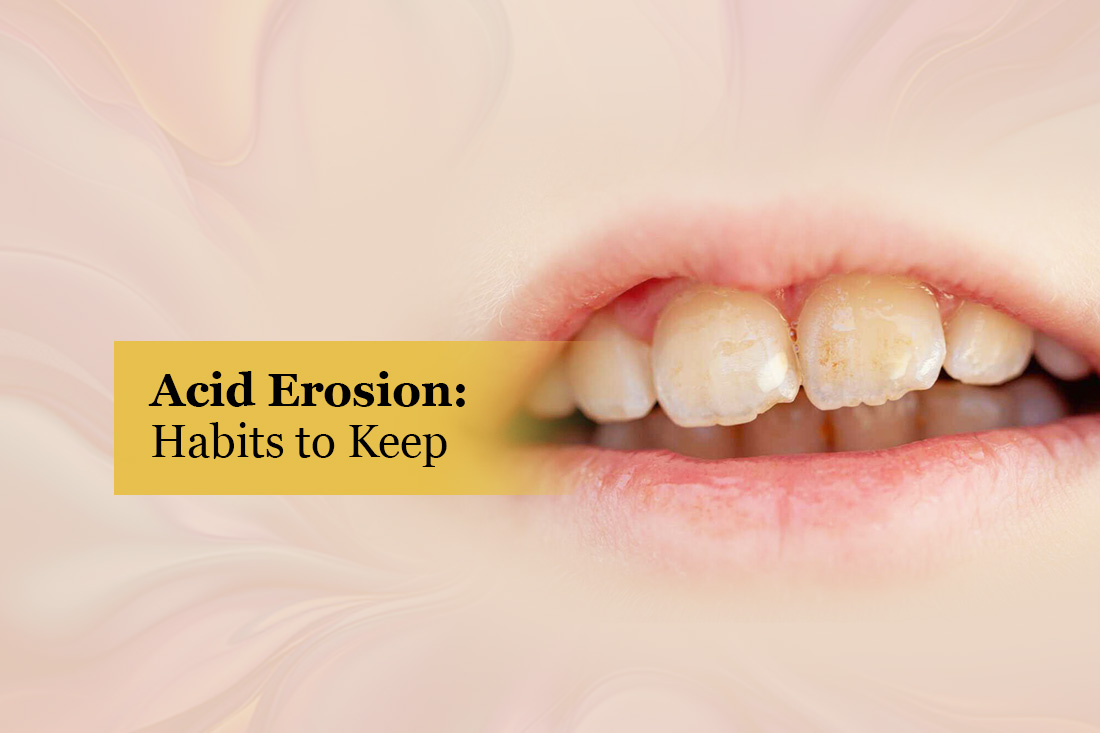
Acid Erosion: How Everyday Habits Can Wear Down Enamel
Learn how acid exposure can affect tooth enamel, what to ask about drinks and reflux, and how to build a practical prevention plan with your dentist.
You may be brushing consistently and still notice that your teeth look thinner at the edges or react differently to cold drinks. Tooth wear has several possible causes. One is repeated exposure to acids from foods, drinks, or the stomach.
If your dentist mentions erosion, ask where the changes were found and what pattern they suggest. The goal is to identify a manageable change in your routine and then see whether the wear remains stable.
How erosion differs from a cavity
Erosion is loss of tooth structure from acid exposure without the bacterial process that causes decay. Acidic drinks and stomach acid associated with reflux or vomiting can contribute. Lost enamel does not grow back. The ADA dental-erosion guidance explains these causes.
Look at the pattern of exposure
Reducing repeated contact with acidic drinks, avoiding holding them in the mouth, and rinsing with water afterward may help. The ADA advises rinsing rather than brushing immediately after acidic exposure. Use a soft brush and an appropriate fluoride toothpaste for regular cleaning.
For the appointment, describe how drinks fit into your day rather than making only a list of brands. Do you finish a drink with a meal or sip it through a long work session? Does a particular routine happen every day or only occasionally? These details give you and the dentist something concrete to discuss.
Mention reflux or repeated vomiting
Stomach acid exposure is relevant to the dental assessment. Tell the dentist about reflux symptoms or repeated vomiting, and discuss those concerns with your medical clinician as well. A plan for the teeth may need to sit alongside care for the underlying cause.
You can bring up these topics privately and ask which information is useful. If more than one clinician is involved, request clear instructions about who is addressing each part of the problem.
Erosion and decay can coexist
Decay follows a different process: bacteria produce acids from sugars and starches, and repeated mineral loss can eventually create a cavity. The NIDCR tooth-decay overview describes that process. An examination helps distinguish the changes and plan prevention for both concerns.
Choose a realistic first change
Ask which habit is most useful to address first and how the dentist will review progress. A short, specific plan is easier to follow than a long list of restrictions. Write down the agreed change, the products recommended, and the date of the next review.
Also ask whether the concern is currently being monitored or whether a restoration is needed. If treatment is proposed, ask how the cause of the wear will be addressed alongside the repair. Understanding both parts helps you make an informed decision.
Bring these questions to a Fullerton checkup
- Which tooth surfaces show wear, and what may be contributing?
- What should I change about my drinking or brushing routine?
- Do I need to discuss reflux or vomiting with my physician?
- How will we check whether the wear is progressing?
Explore general dentistry and restorative dentistry at Real Dentistry, or request an appointment to discuss enamel wear.
Keep reading