
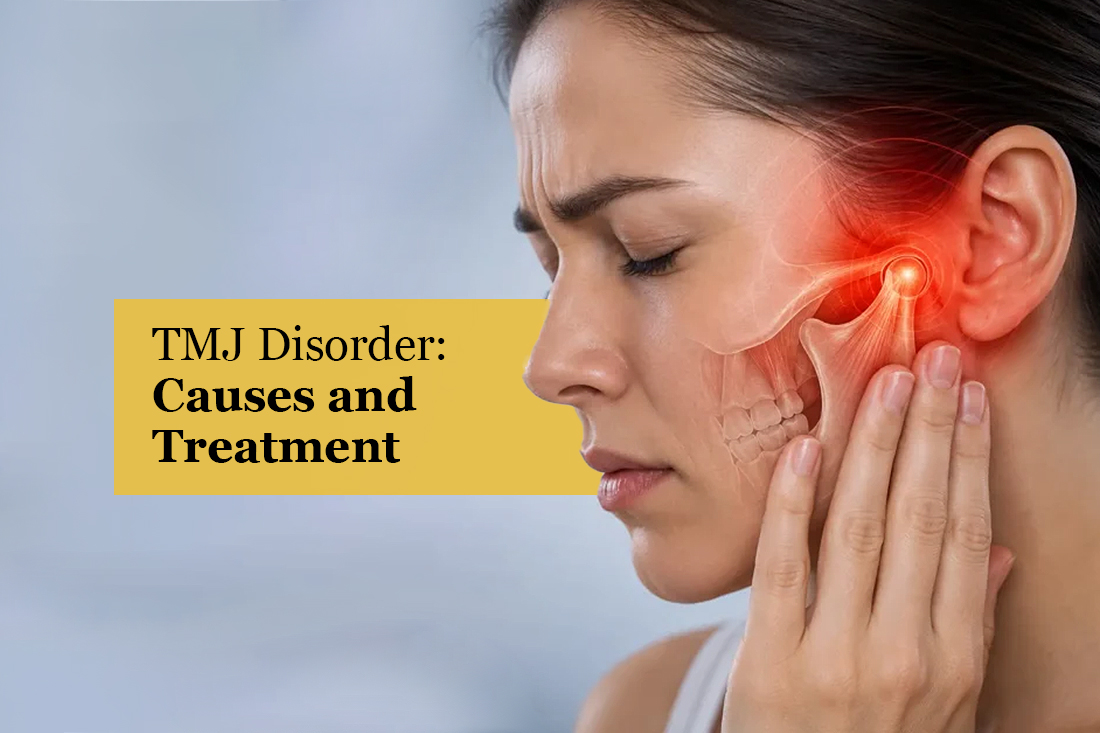
TMJ Disorder: Causes, Symptoms, and Treatment Options in Fullerton
 By Dr. Kanak Trivedi, DDS
May 06, 2026 · 3 min read
By Dr. Kanak Trivedi, DDS
May 06, 2026 · 3 min read
Jaw pain, clicking, or frequent headaches? Learn the causes and symptoms of TMJ disorder and how Fullerton dentists diagnose and treat it.
That clicking sound when you chew, the tension headaches, the jaw that locks up after a big meal — these are classic signs of TMJ disorder, and they're more common than most people realize. Here's what's actually happening, and how it's treated.
What Is the Temporomandibular Joint?
The temporomandibular joint (TMJ) connects your lower jaw bone to your skull on either side. It handles complex movement, allowing you to speak, chew, and swallow smoothly.
Common Causes: Stress, Grinding, Misalignment
TMJ disorders develop when joint structures experience excessive strain. Common causes include stress-induced tooth grinding (bruxism), structural bite misalignment, joint arthritis, or jaw injury.
Symptoms That Point to TMJ Disorder
- Clicking, popping, or grating sounds when opening your mouth.
- Chronic facial, neck, or shoulder pain.
- Frequent morning tension headaches or earaches.
- Difficulty or pain while chewing solid foods.
- Jaws that lock open or shut.
How Dentists Diagnose TMJ Issues
At Real Dentistry, we evaluate your joint motion, examine bite alignment, check for muscle tenderness, and utilize digital imaging to review joint structure.
Treatment Options: Night Guards, Physical Therapy, and More
Effective TMJ care begins conservatively. Custom-molded night guards cushion teeth to reduce joint pressure. Jaw exercises, stress reduction, and bite adjustments provide effective long-term relief.
When Jaw Pain Needs Same-Week Attention
If jaw pain prevents complete mouth opening or interferes with daily eating, seek a professional evaluation right away.
Keep reading