Sports Mouthguards: Why a Custom Fit Protects Teeth Better
Learn how mouthguards prevent chipped and knocked-out teeth, the difference between store-bought and custom-fitted guards, and which sports call for one, from a Fullerton dentist.
Dental injuries are among the most common injuries in youth and adult sports, and most of them are preventable. A mouthguard cushions blows to the face, spreading the force so teeth are less likely to chip, crack, or be knocked out. It also protects the lips, cheeks, and tongue and can reduce the risk of jaw injury.
Real Dentistry makes custom mouthguards for athletes of all ages in Fullerton. This article explains the types available and how to choose.
Which sports need one
Any activity with a risk of contact or falls: football, basketball, soccer, hockey, lacrosse, martial arts, boxing, skateboarding, and cycling. Basketball and soccer cause many dental injuries despite not being thought of as contact sports. The ADA mouthguard guide recommends a guard for all of these.
Three types of mouthguard
- Stock guards: pre-formed and ready to wear. Inexpensive, but bulky and loose, so athletes tend to clench to hold them in and often leave them out.
- Boil-and-bite guards: softened in hot water and shaped around the teeth. Better fit than stock guards, but still thick and prone to tearing.
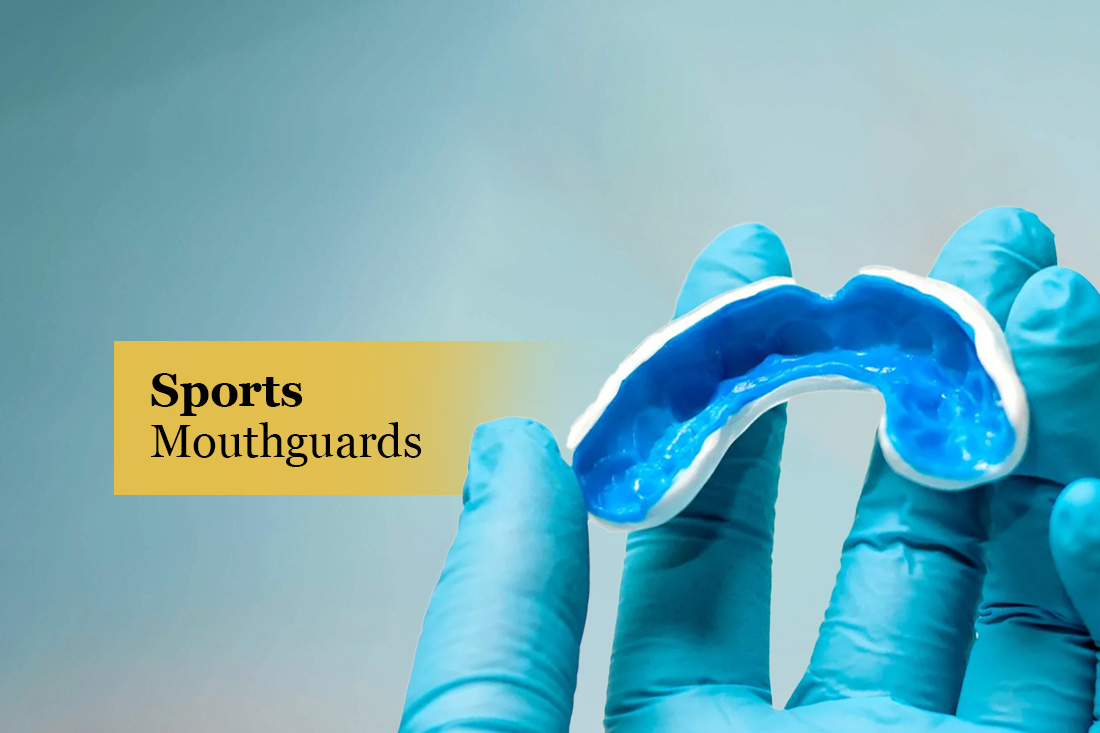
- Custom-fitted guards: made by a dentist from an impression or scan of your teeth. Thin, secure, comfortable to breathe and talk with, and the most protective.
Why fit matters
A guard only works if it is worn, and it is only worn if it is comfortable. Custom guards stay in place without clenching, cover the right teeth to the right depth, and can be made thicker in the areas that take the most impact for a particular sport. For athletes with braces, a custom guard is shaped to protect the brackets and the lips.
Caring for a mouthguard
Rinse it with cool water after use, brush it gently with a toothbrush, and let it dry in a ventilated case. Keep it out of hot cars and away from pets. Bring it to checkups so the dentist can check the fit, especially for children whose mouths are still changing. Replace it when it becomes loose, thin, or cracked.
What it costs
A custom mouthguard costs more than a store-bought one, but far less than repairing a broken tooth or replacing a lost one. Some dental plans contribute toward the cost. Ask the office for a quote.
Protect your smile this season
Learn more about children's dentistry and preventive care at Real Dentistry. Request an appointment or call (714) 525-2888 to have a mouthguard made.
Keep reading