Electric vs. Manual Toothbrush: What Actually Matters for Clean Teeth
Is an electric toothbrush worth it? Compare electric and manual brushes on cleaning, gum health, cost, and technique, with practical advice from a Fullerton dental team.
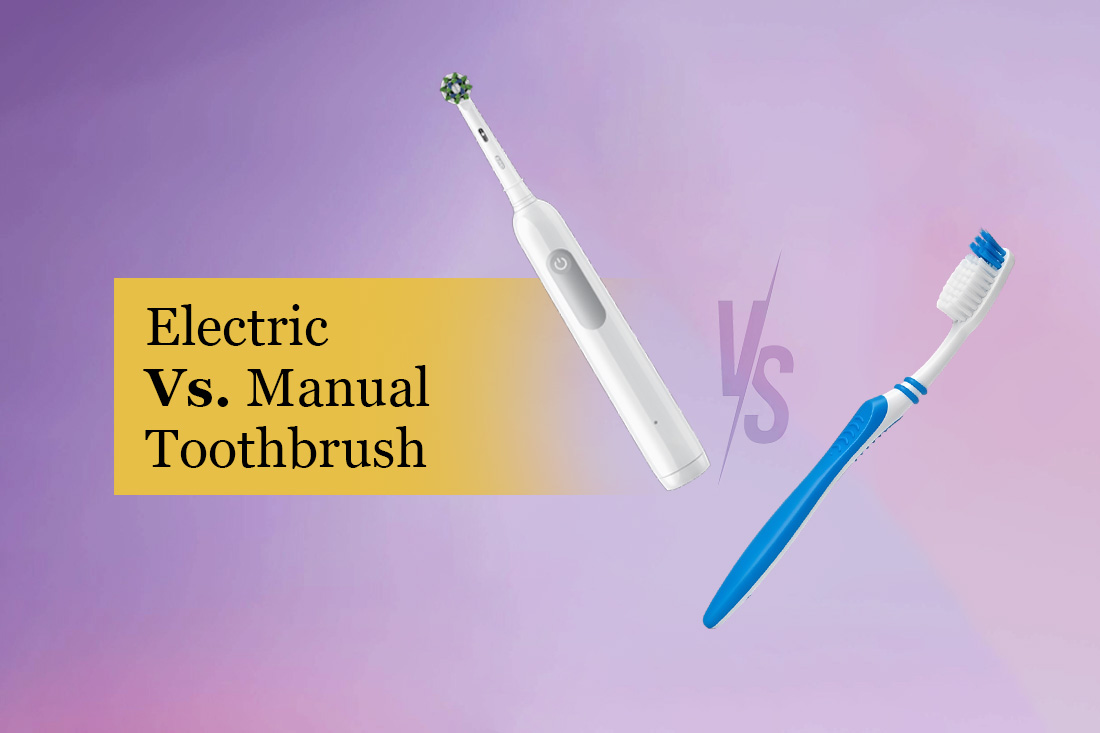
Patients often ask whether they should switch to an electric toothbrush. The short answer is that a manual brush used well cleans teeth effectively, but most people do not use one well. Electric brushes make good technique easier, and the research shows a modest but real advantage for plaque removal and gum health.
Here is how the two compare, and what to look for whichever you choose.
What the evidence says
Reviews of clinical studies find that powered brushes, particularly oscillating-rotating models, remove slightly more plaque and reduce gum inflammation a little more than manual brushes over several months. The difference is not dramatic, but it is consistent. The ADA toothbrush guide notes that both types work when used correctly.
Where electric brushes help most
- Built-in timers encourage a full two minutes, which most manual brushers do not reach.
- Pressure sensors stop the heavy scrubbing that wears enamel and gums.
- The head does the work, which helps people with arthritis, limited mobility, or braces.
- Children often brush longer and more thoroughly with an electric brush.
Where a manual brush is fine
If your checkups show little plaque and healthy gums, your manual brushing is working. Choose a soft-bristled brush with a small head, replace it every three months or when the bristles splay, and brush for two full minutes with short, gentle strokes angled toward the gum line.
Choosing an electric brush
You do not need the most expensive model. Look for a soft replaceable head, a two-minute timer, and ideally a pressure sensor. Replacement heads are an ongoing cost, so check their price before you buy. Apps and multiple modes are optional extras.
Technique matters more than the tool
With an electric brush, hold it lightly against each tooth for a few seconds and let it move; do not scrub. Cover the outside, inside, and chewing surfaces, and spend time along the gum line. Whichever brush you use, cleaning between teeth daily with floss or interdental brushes reaches the areas a brush cannot.
Ask at your next cleaning
Your hygienist can see exactly where plaque builds up and show you how to reach it. Book a professional cleaning at Real Dentistry. Request an appointment or call (714) 525-2888.
Keep reading