
Caring for Dental Implants: Daily Cleaning and Follow-Up Visits
Dental implants need ongoing care. Learn what to ask about daily cleaning, maintenance visits, and changes that should prompt a call to your dentist.
Once an implant restoration feels comfortable, it is easy to think the work is complete. The next part is learning how to keep the replacement tooth and surrounding tissues clean. Ask for a maintenance plan before your treatment visits become less frequent.
This article concerns ongoing care. If your implant was placed recently, follow the postoperative instructions from your treating clinician; a healing surgical site may have different cleaning and eating instructions from a fully restored implant.
The tissues around an implant still need attention
Bacteria can accumulate around implants and cause inflammation. Peri-implant mucositis affects the soft tissues; peri-implantitis also involves loss of supporting bone. Redness, tenderness, and bleeding deserve attention. The American Academy of Periodontology's patient guide explains these conditions.
Ask for a cleaning demonstration
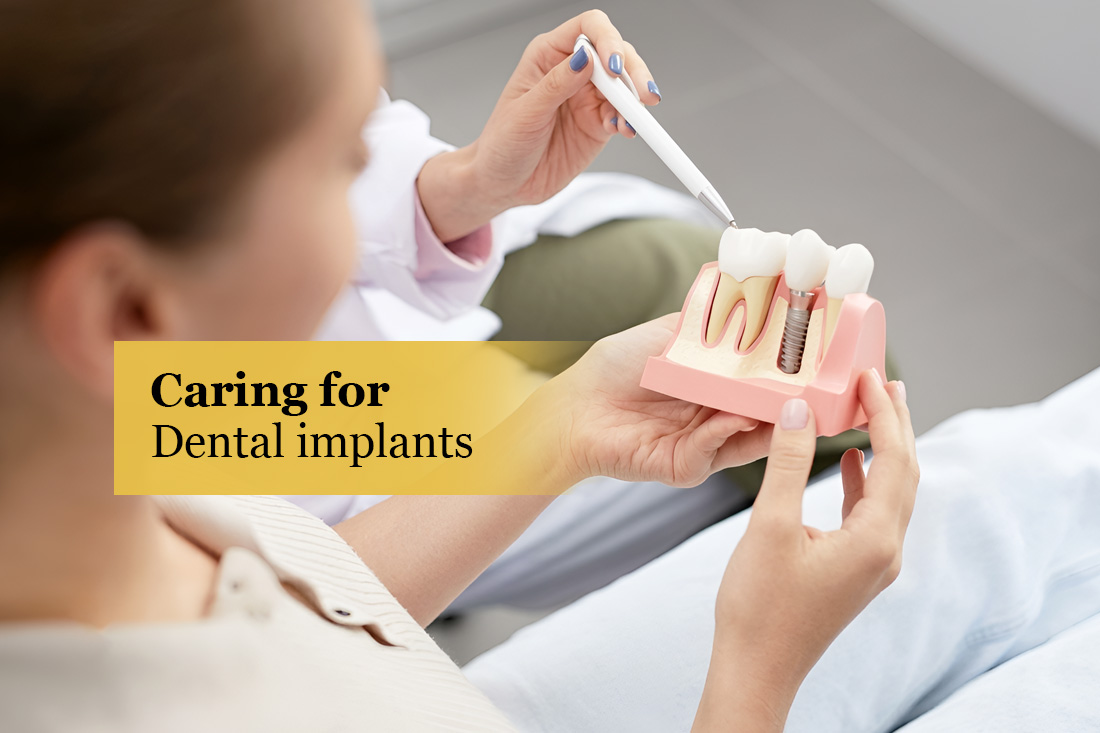
Implants and surrounding teeth need regular cleaning. The suitable tools depend on the restoration and the spaces around it. Ask the team to show you how to reach the gumline and clean between or beneath the replacement teeth. Do not assume a tool that works for one implant bridge is suitable for every restoration.
Try the demonstrated method while you are still in the office. If reaching the area is awkward, ask for another approach. A demonstration also gives you a chance to ask how much pressure to use and how to recognize areas you keep missing.
Keep follow-up visits on the calendar
Your clinician should set a maintenance interval suited to your history and examination. Previous gum disease, plaque control, smoking, and diabetes can affect risk. Home cleaning and professional monitoring work together; feeling comfortable does not tell you everything about the supporting tissues.
Before leaving a maintenance visit, ask what was found and whether the instructions changed. Keep the next appointment date alongside any updated home-care notes. That makes it easier to follow the plan over several years.
Report looseness or pain promptly
If an implant feels painful or loose, contact your dental provider right away. The problem needs assessment rather than an attempt to tighten or glue parts at home. The FDA's implant guidance emphasizes ongoing hygiene, regular visits, and reporting these changes.
Keep useful records with your care plan
The FDA advises asking for the implant system's brand and model and keeping that information. It can be useful if you move or change dental providers. Also keep the contact details for the clinician who placed the implant and the clinician maintaining the restoration.
When care involves more than one office, ask who is responsible for each follow-up. A short written note can clarify where to call about the restoration, gum health, or a new symptom.
Questions for your next implant visit
- Can you check my cleaning technique around this restoration?
- Which tools should I use in each space?
- When should I return, and which changes need an earlier call?
- Do you have the implant details in my record?
For care in Fullerton, explore dental implants and periodontal therapy at Real Dentistry, or request an appointment to discuss a maintenance plan.
Keep reading