
Braces vs. Clear Aligners: Which Is Right for You or Your Teen?
Comparing braces and clear aligners? See how they differ in appearance, comfort, treatment time, cost, and which cases each handles best, from a Fullerton dental practice.
Both braces and clear aligners move teeth by applying gentle, steady pressure. The difference lies in how they do it and what that means for daily life. Choosing between them comes down to the complexity of the case, your lifestyle, and how much responsibility you or your teen can take on.
Real Dentistry offers both orthodontic treatment and clear aligners in Fullerton, so our advice is based on what will work best for your teeth rather than one product.
How each one works
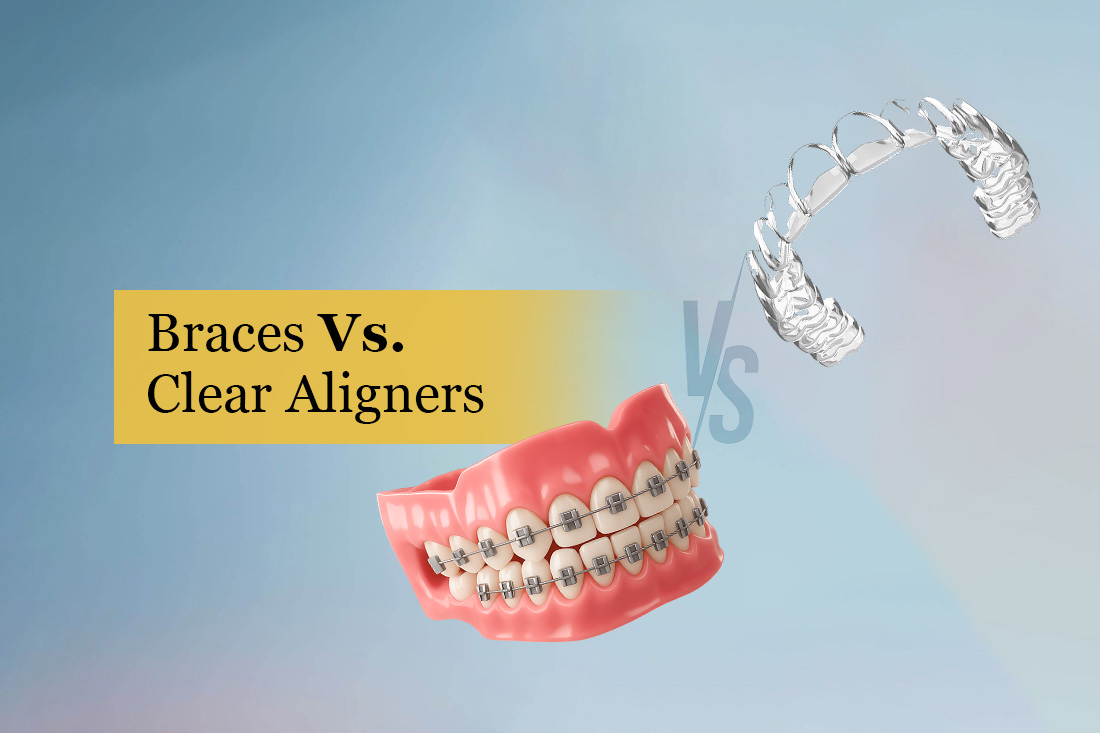
Braces use brackets bonded to the teeth and a wire that the dentist adjusts every few weeks. Clear aligners are a series of removable plastic trays, each worn for one to two weeks, that move the teeth in small steps. Aligners must be worn 20 to 22 hours a day to stay on schedule. The ADA braces overview explains the basics of both.
Where braces have the edge
- Complex cases: severe crowding, large bite corrections, and rotated or impacted teeth.
- Compliance: they work around the clock without relying on the patient to wear them.
- Cost: traditional metal braces are often the lower-cost option.
Where aligners have the edge
- Appearance: nearly invisible, which matters to many adults and teens.
- Eating and cleaning: trays come out, so there are no food restrictions and brushing and flossing stay simple.
- Comfort: no brackets or wires to irritate the cheeks, and fewer emergency visits.
Treatment time and cost
Mild to moderate cases take a similar time with either option, often 12 to 24 months. Braces may finish complex cases faster because they allow more precise control. Costs overlap considerably; aligners for simple cases can be comparable to braces, while complex aligner treatment may cost more. Dental insurance with an orthodontic benefit usually covers both in the same way. Ask for a written plan with the total fee and what is included, such as retainers.
A note for parents of teens
Aligners work well for teens who are organized and motivated, and many systems include wear indicators. If your teen is likely to lose trays or forget to wear them, braces remove that risk. Either way, retainers after treatment are essential to hold the result.
Which is right for you
The honest answer comes from an examination and X-rays. Request a consultation at Real Dentistry or call (714) 525-2888, and we will show you what each option would involve for your teeth.
Keep reading